DRONE FIDELITY at AUSA 2026: A Veteran’s Perspective on Emerging Technology
For a company whose work revolves around aerial imaging, a defense exhibition offers a different perspective on the sky. On October 12, DRONE FIDELITY® Founder & CEO and U.S. Army veteran Paul Davis attended the Association of the United States Army’s Annual Meeting & Exposition in Washington, DC.
As a veteran-owned small business, we value staying connected with the military community and keeping a pulse on technology across industries, including defense. The day offered a fascinating mix of autonomous aviation, air defense, tactical vehicles and the engineering that supports demanding missions.
Autonomous Aviation: From Cargo Helicopters to Runway-Independent Concepts
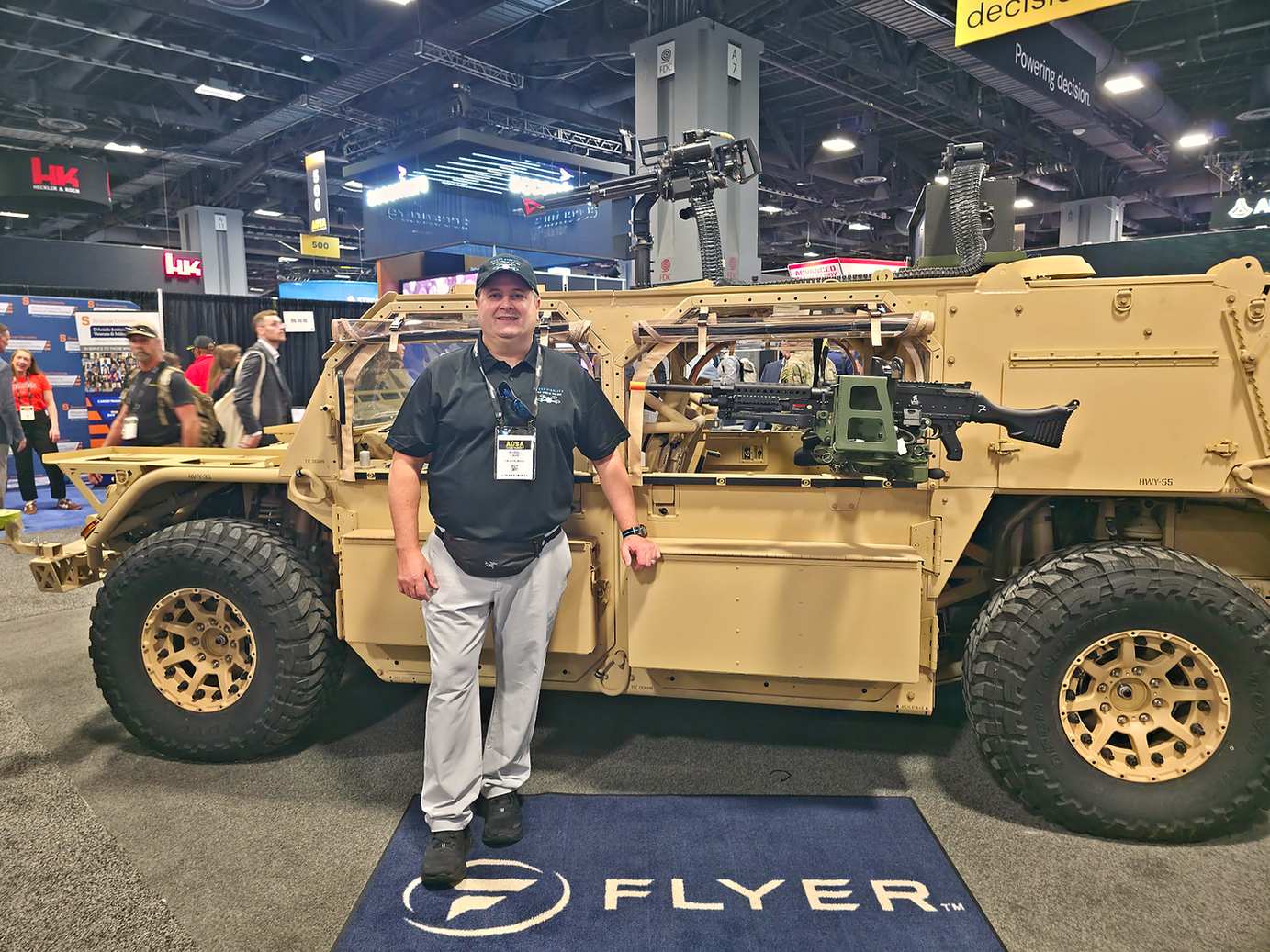
Two aircraft exhibits showed how widely autonomy is being explored. Shield AI’s X-BAT display presented a jet designed for vertical takeoff and landing, with the company’s Hivemind software providing its autonomous capabilities. The idea is to reduce dependence on conventional runways—not simply to make a larger version of a commercial drone.
At Sikorsky’s exhibit, a scale model of the S-70UAS U-Hawk showed a different application: adapting the Black Hawk lineage for autonomous cargo missions. Sikorsky describes a redesigned forward section that trades the conventional cockpit for additional cargo space.
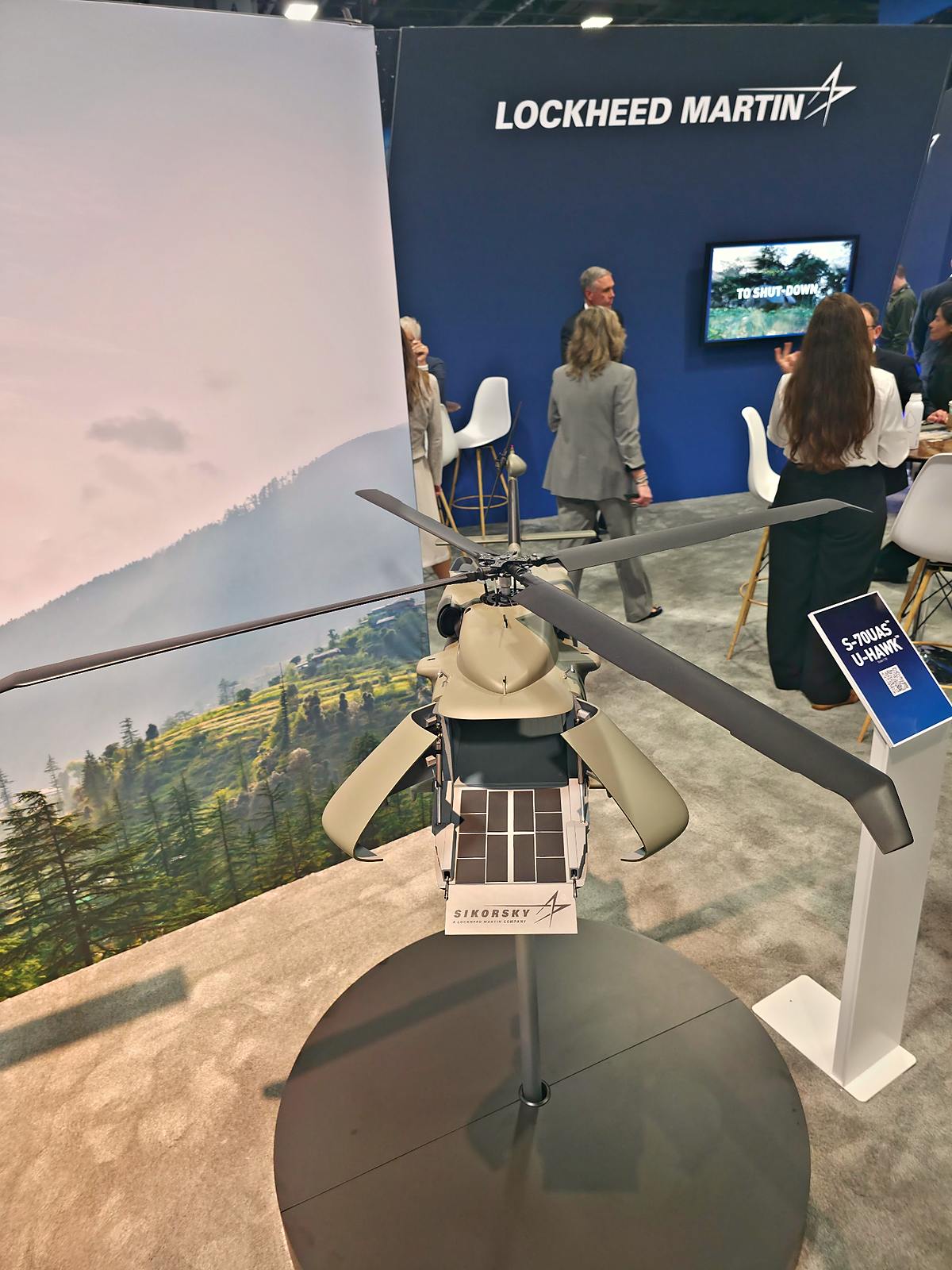
For DF, these exhibits were an opportunity to consider familiar questions at a different scale: how aircraft, sensors, mission planning and dependable execution fit together.
A Different View of the Sky: Air Defense
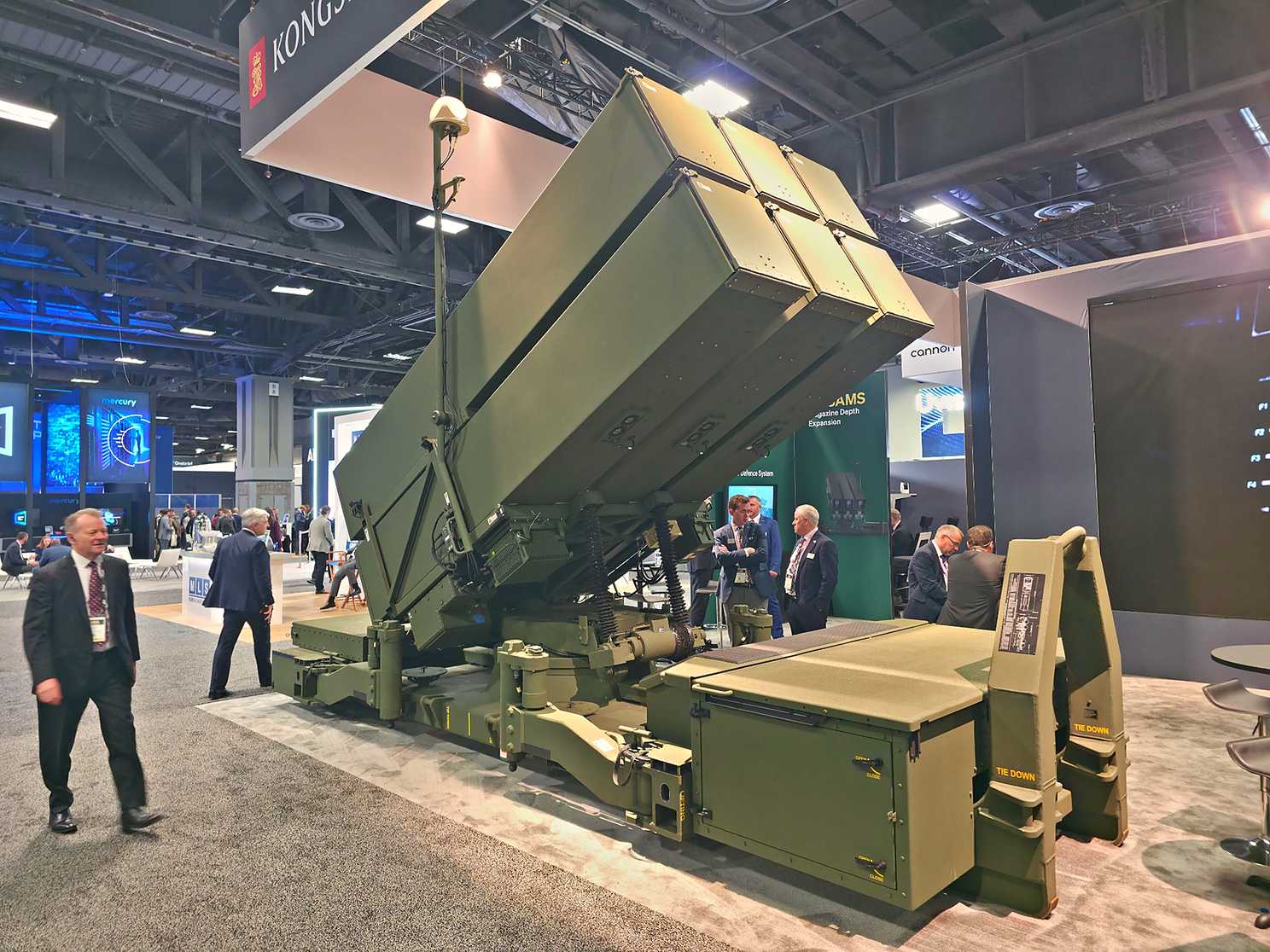
Air-defense exhibits provided a contrasting perspective. The Kongsberg NASAMS launcher is one component of a larger network connecting sensors, command systems and launchers. Its backstory is as much about sharing information and coordinating decisions as it is about the hardware on display.
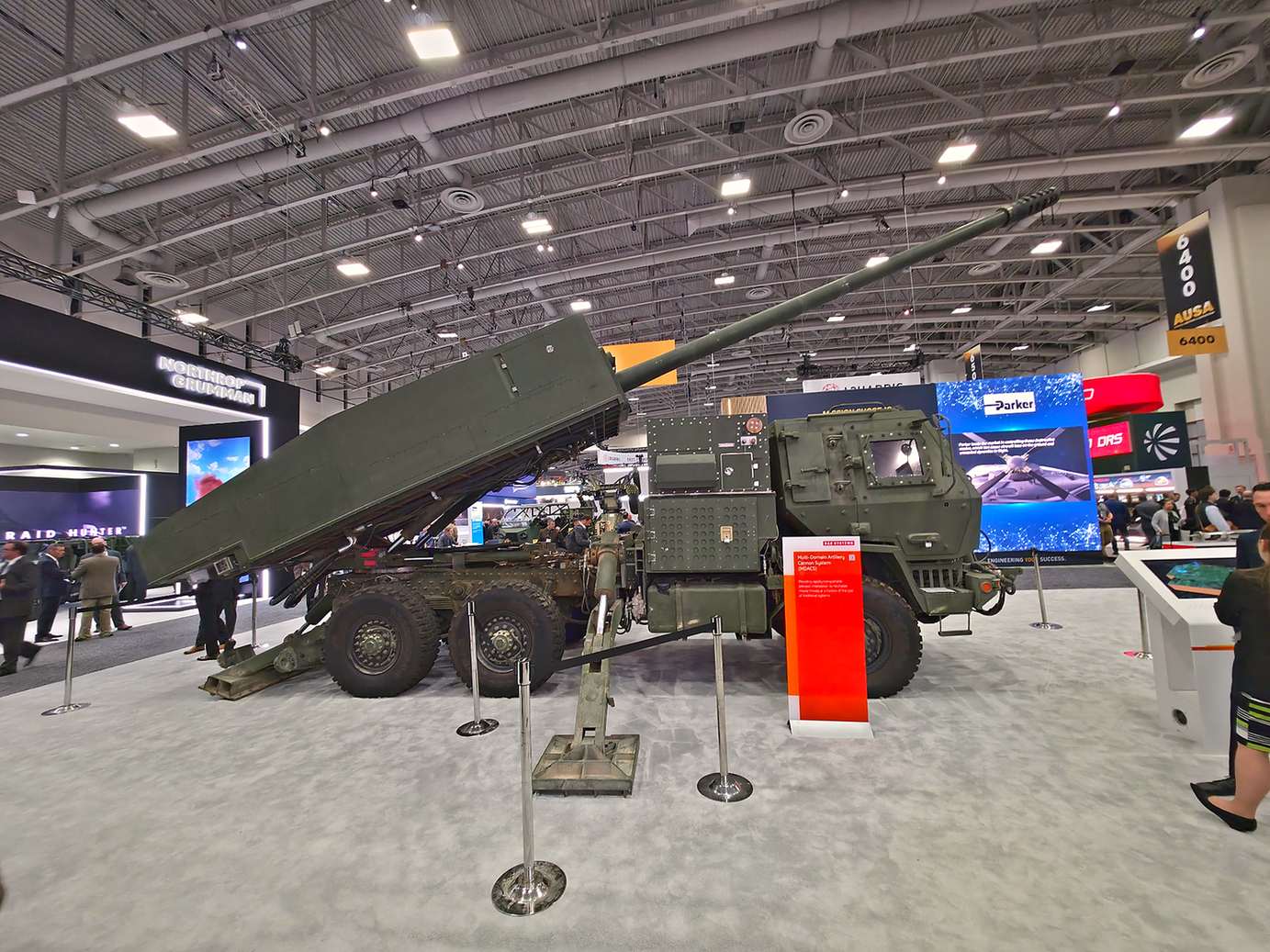
BAE Systems’ Multi-Domain Artillery Cannon System (MDACS), announced at AUSA 2026, takes a cannon-based approach that combines guided projectiles, sensors and fire-direction technology.
Lockheed Martin’s MORFIUS display brought the counter-drone theme into sharp focus. The company describes MORFIUS as a reusable airborne interceptor that uses high-power microwave energy to counter unmanned aircraft. Rather than relying on a conventional explosive warhead, it carries a directed-energy payload designed to disrupt drone electronics—an example of how drones can also become part of the defense against other drones.
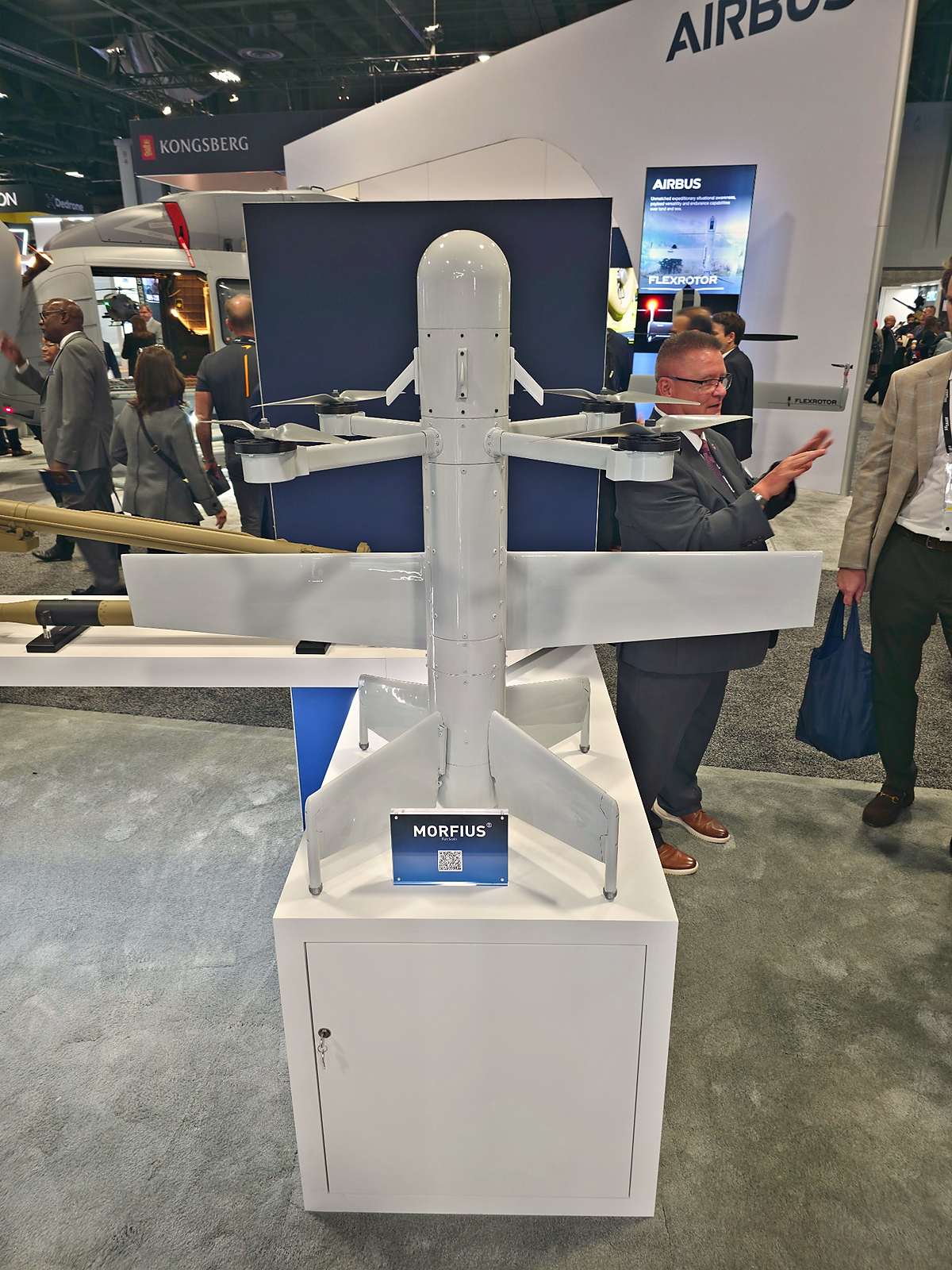
That contrast brought a smile: we spend our days figuring out how to keep drones safely in the sky—and encountered plenty of engineering focused on bringing airborne threats back down!
Of course, these systems serve different missions. The exhibition’s air-defense and strike technologies should not all be grouped together as counter-drone equipment.
Vertical Lift and Mission Equipment
Bell’s exhibits offered another look at aviation technology. A large tiltrotor display illustrated the combination of vertical lift and airplane-like forward flight. A Bell 407GXi, clearly marked on the airframe, showed how sensors and other mission equipment can adapt a helicopter to specialized work.
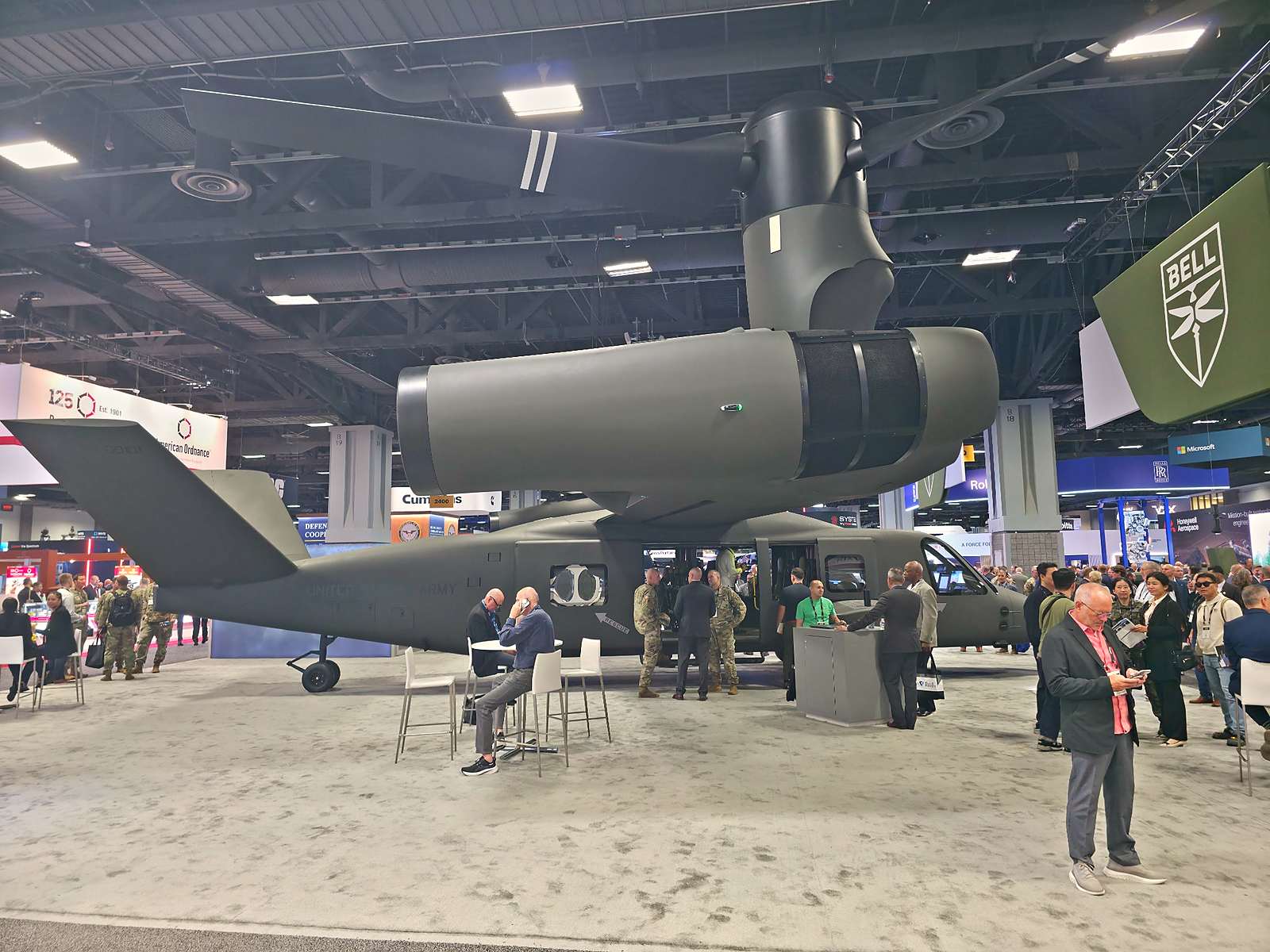
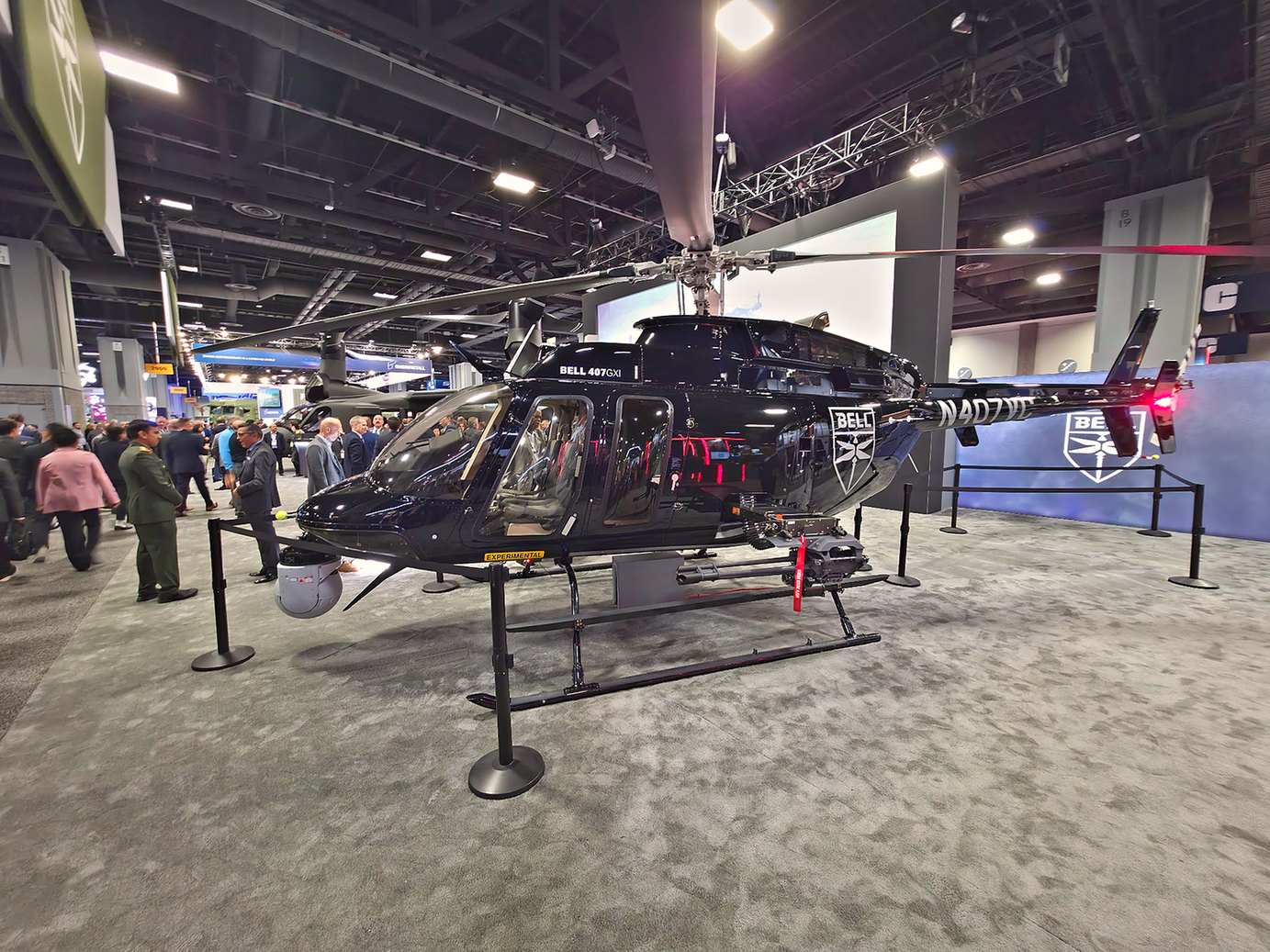
The connection to our work is practical: the platform is only part of the solution. The payload, operating conditions and intended deliverable determine whether the equipment fits the task.
On the Ground: Mobility, Protection and Support
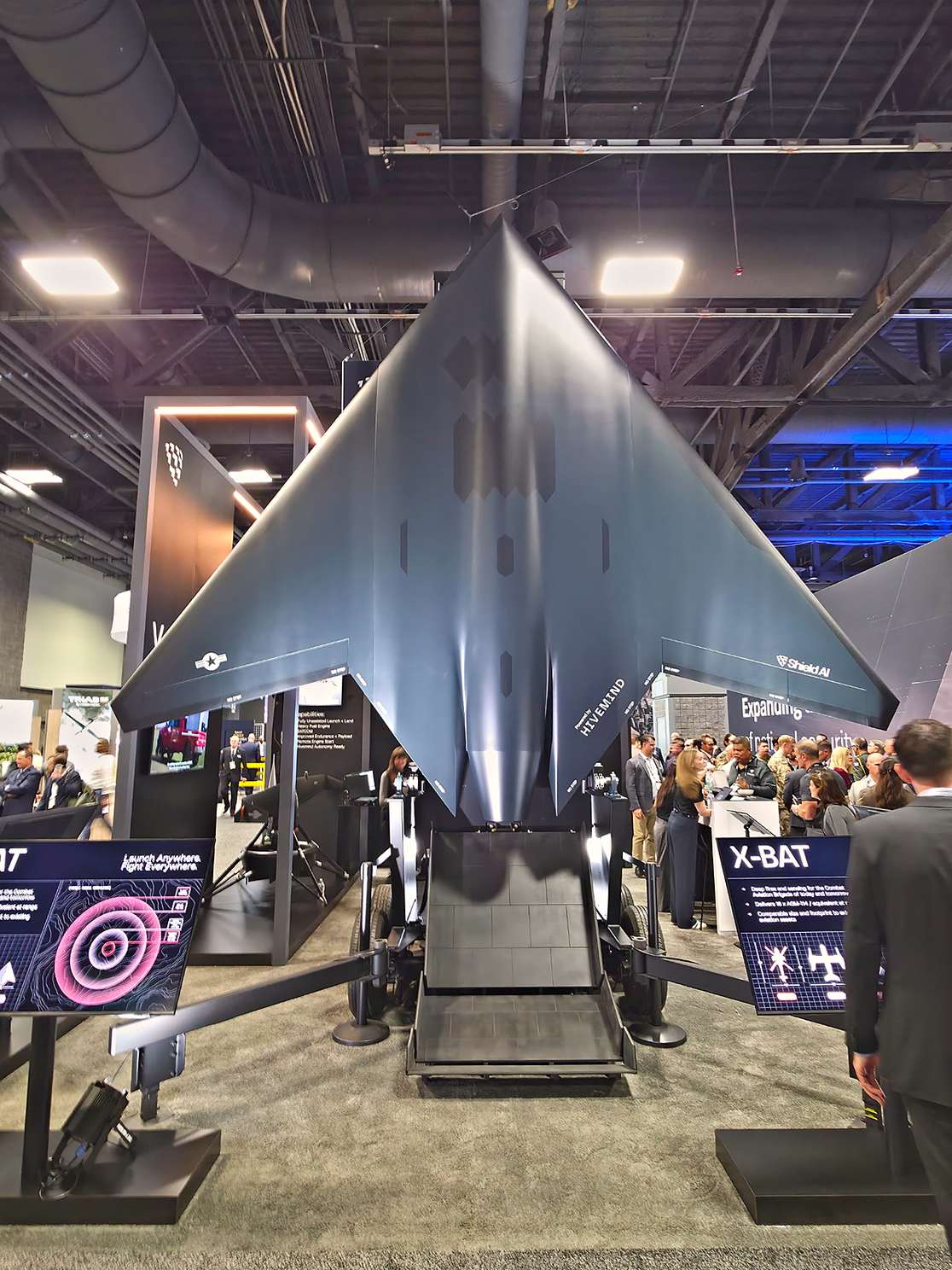
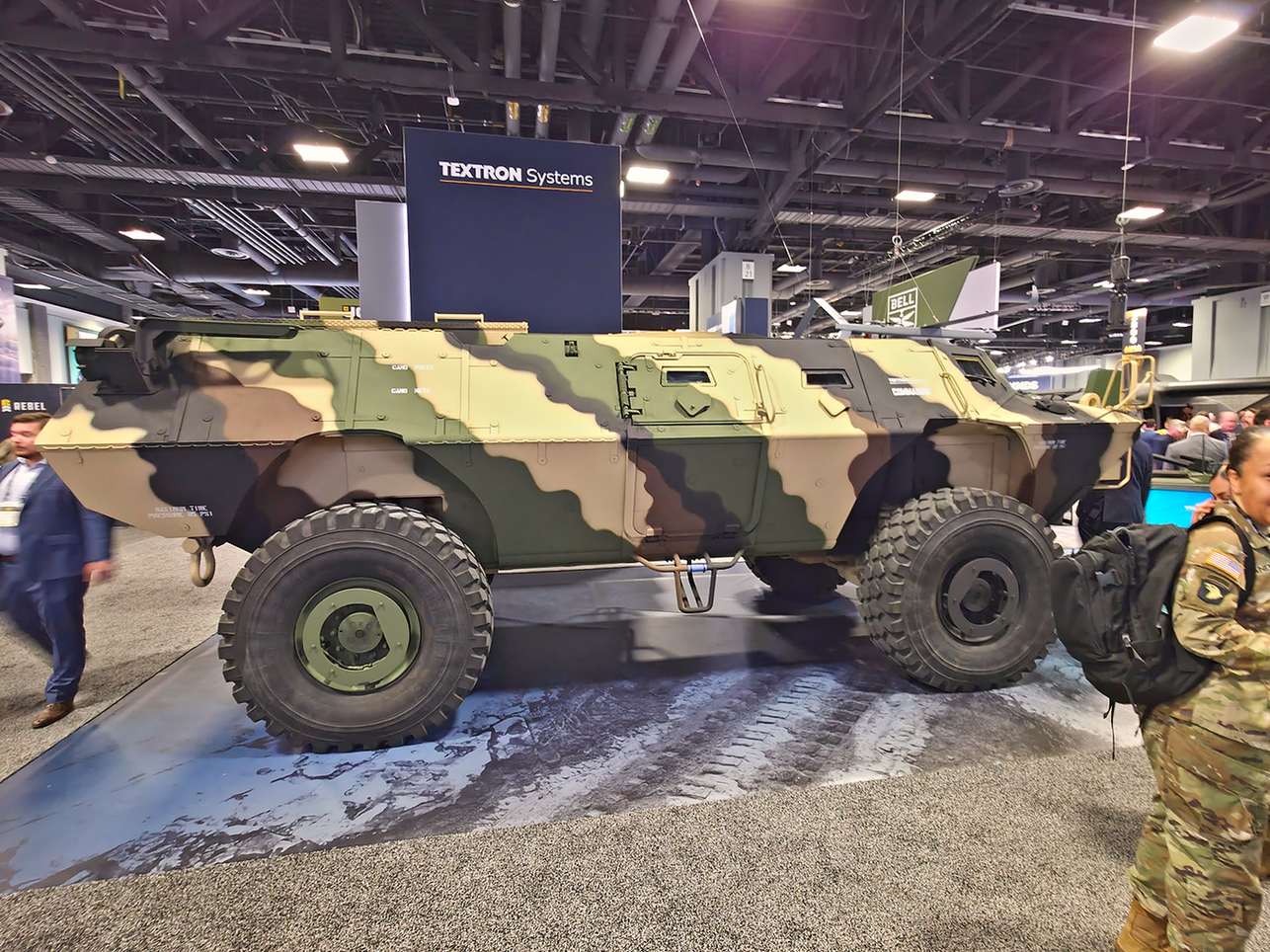
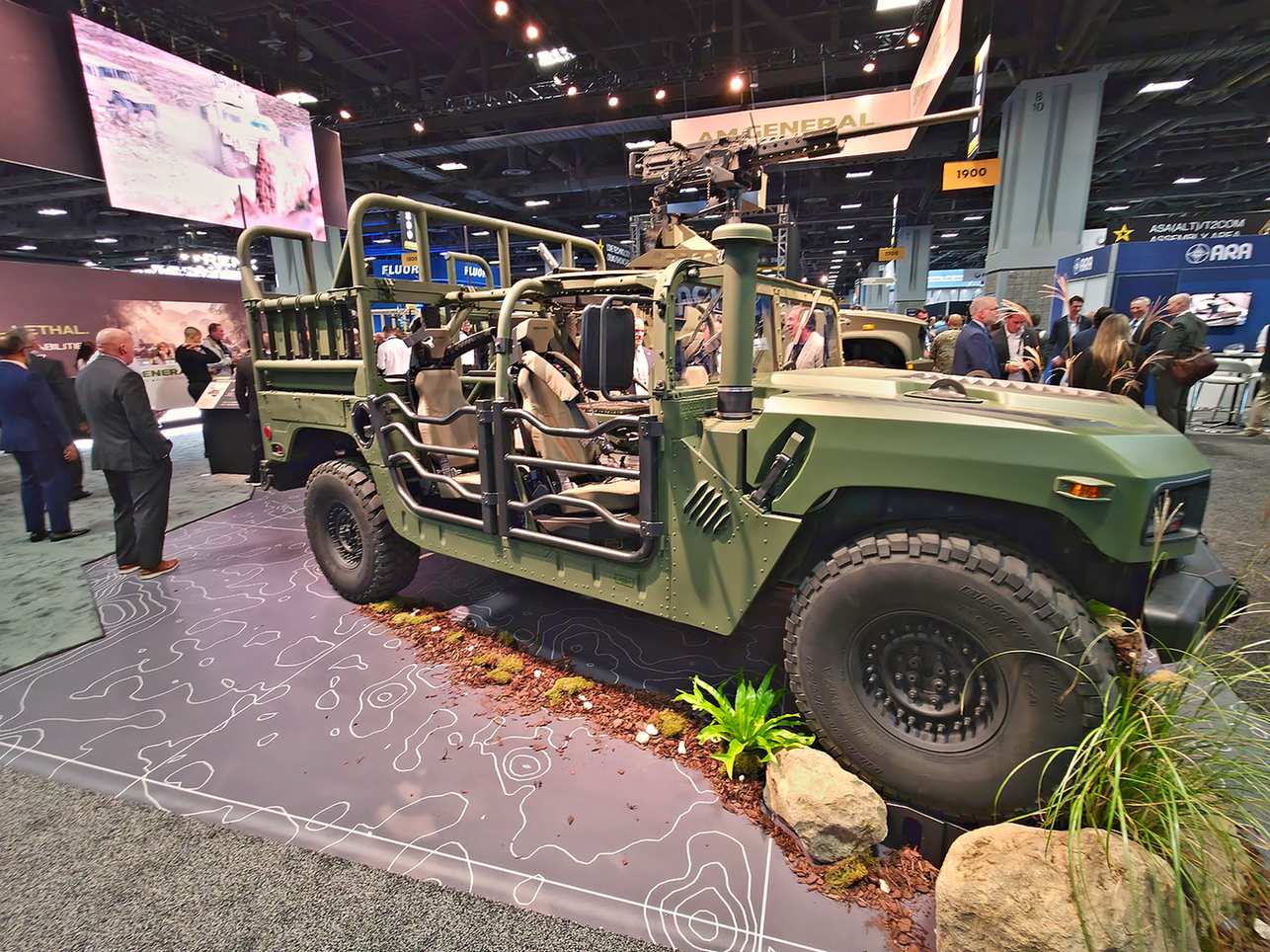
The vehicle displays put the aerial technology into a broader operational setting. Textron’s COMMANDO family supports roles such as protected transport, reconnaissance and command-and-control. Nearby tactical vehicles and cargo trucks highlighted the importance of mobility, adaptable payloads and support equipment.
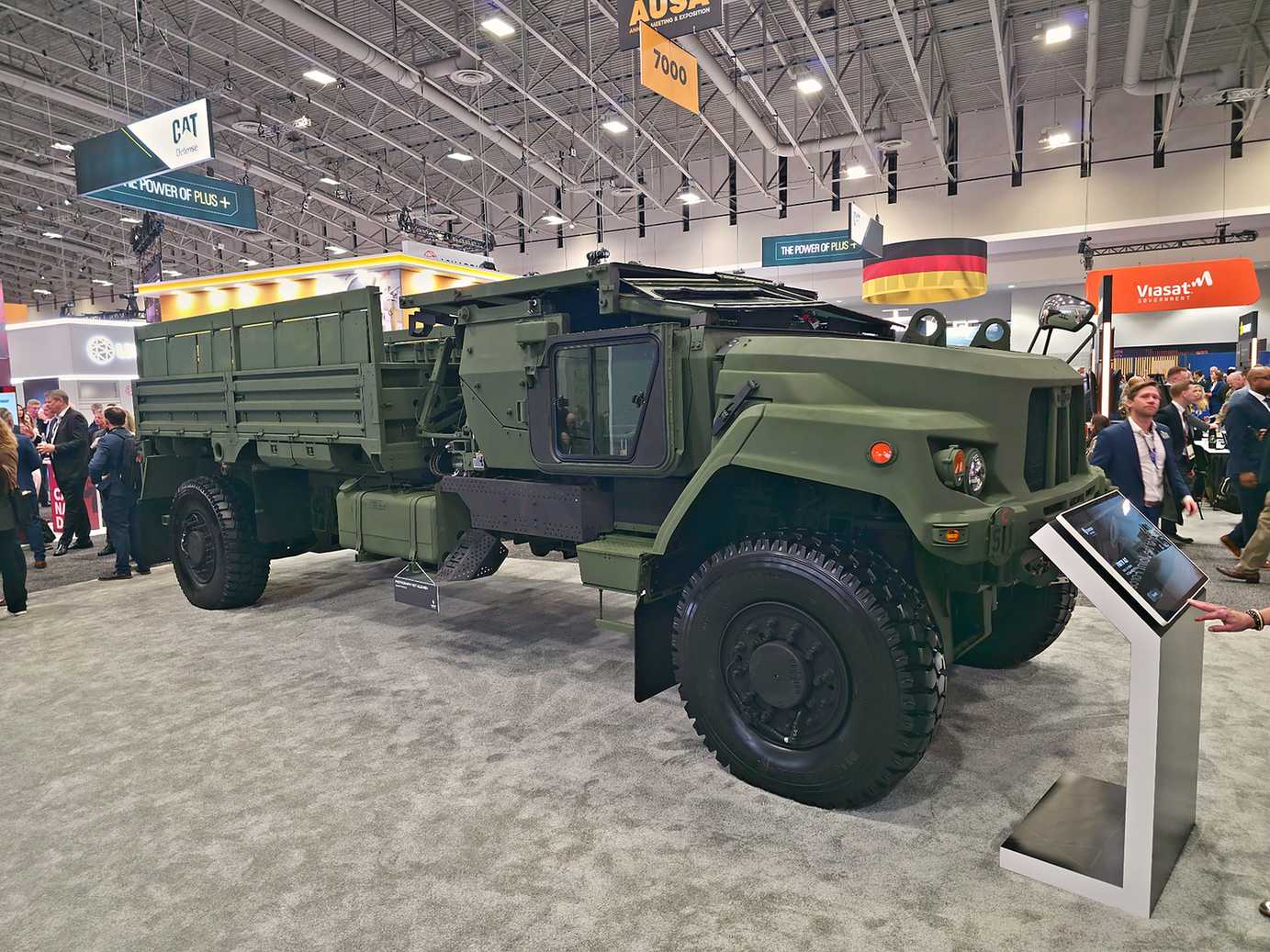
More From the Exhibit Floor
Other photographs captured the scale and variety of the equipment on display—from missile models to containerized systems and truck-mounted artillery.
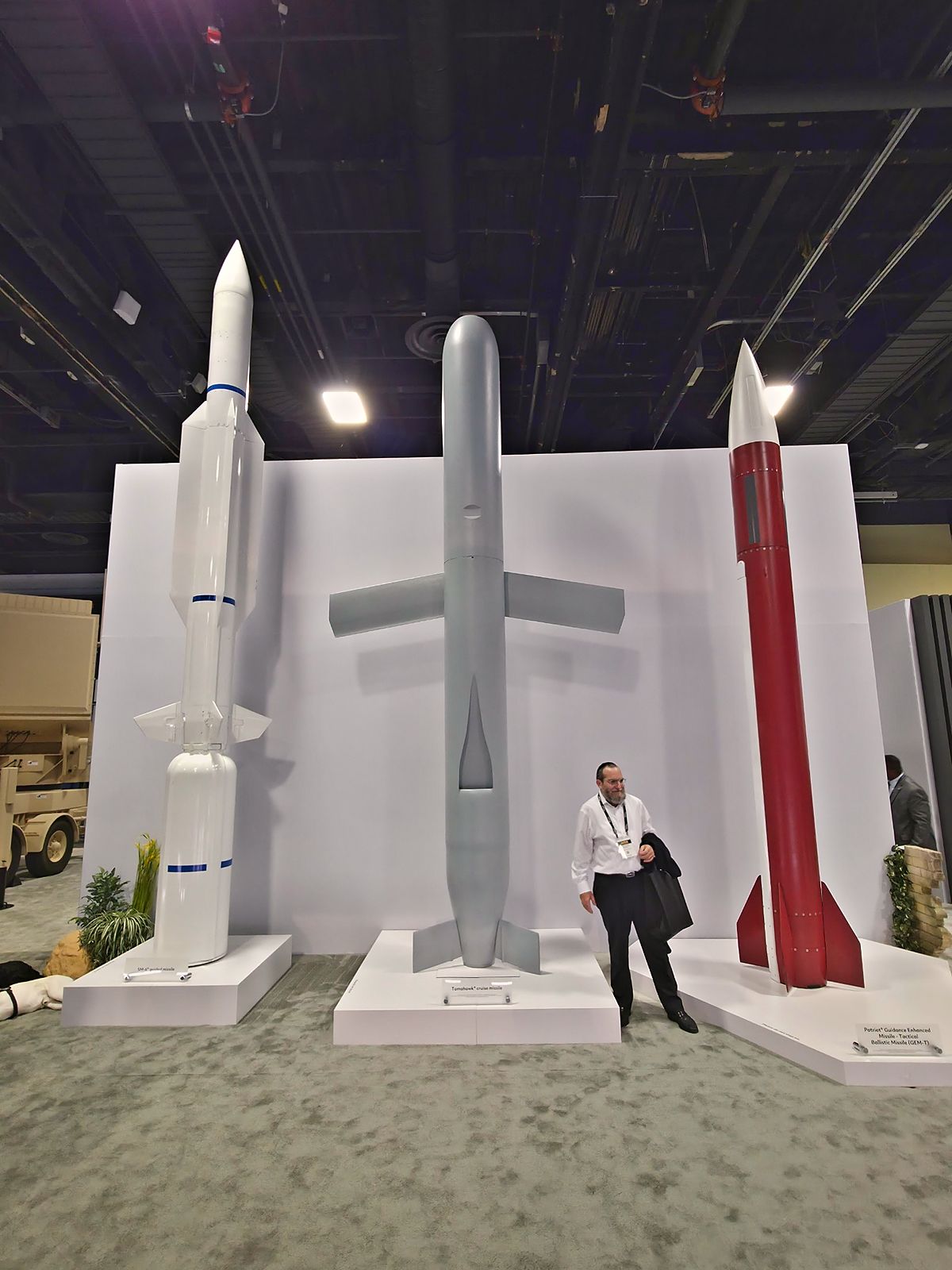
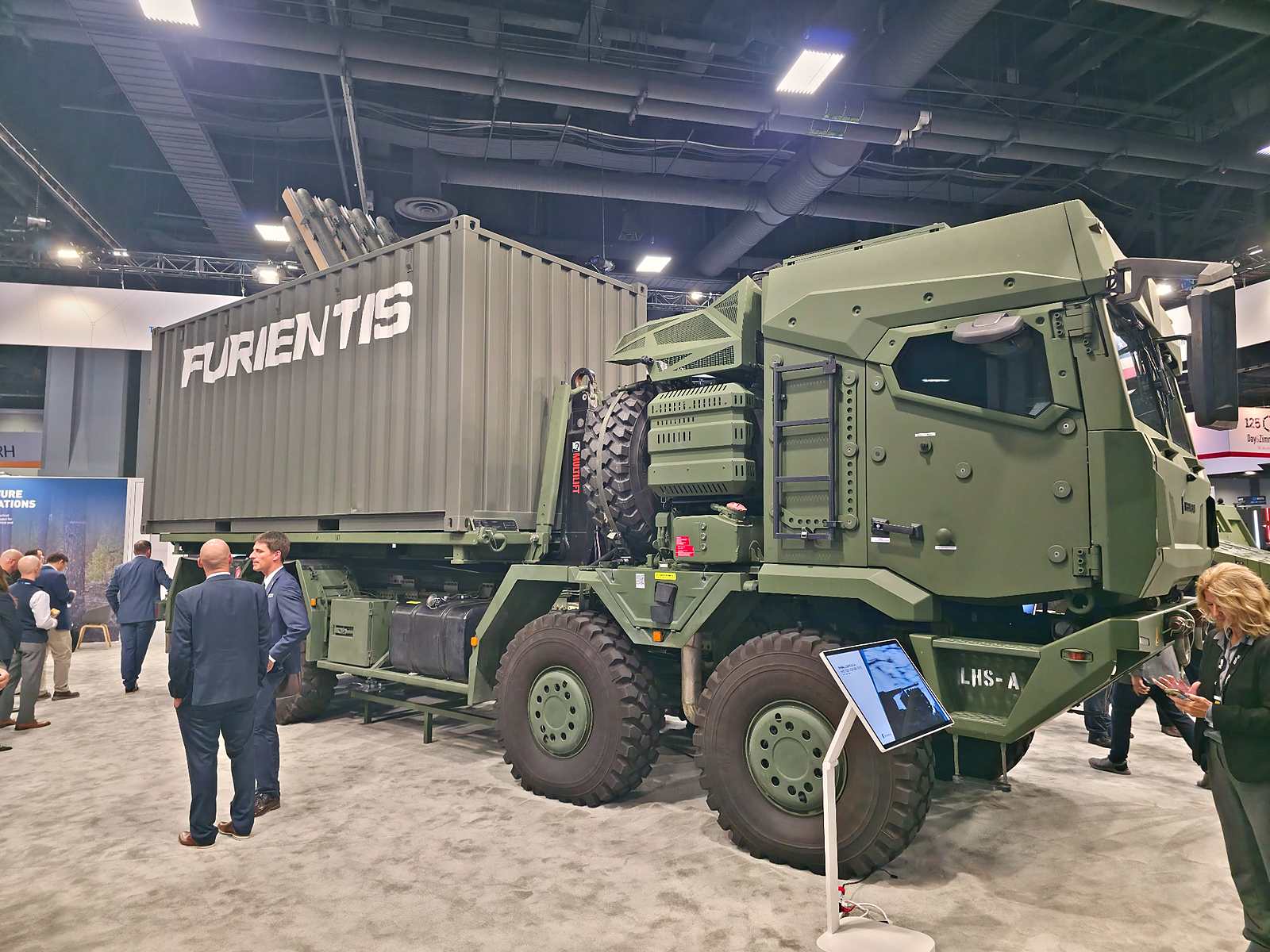
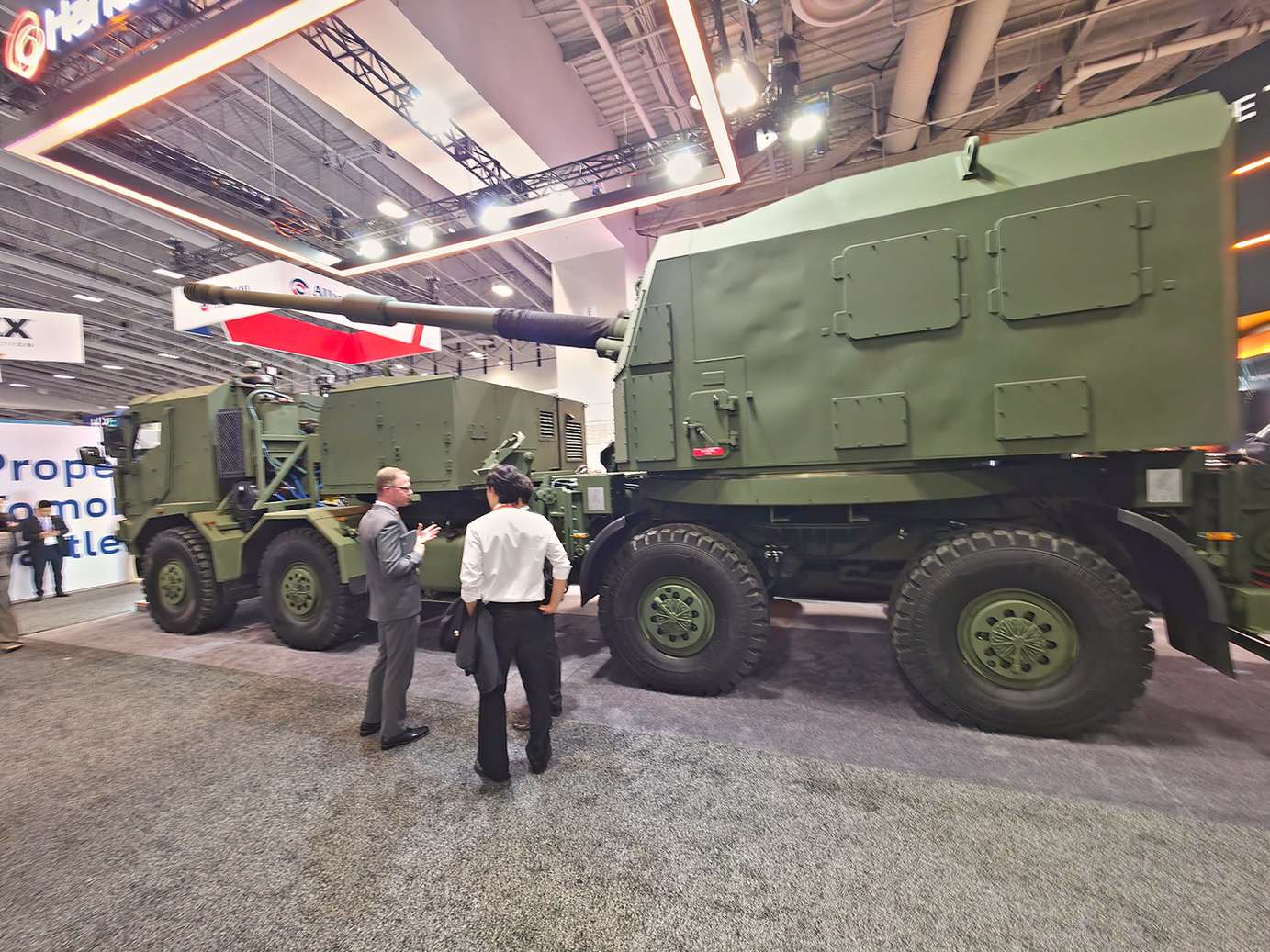
Why We Keep Exploring
DF’s day-to-day work focuses on construction, property, infrastructure and site intelligence. Looking beyond those markets helps us stay curious about how technology is developing and how other industries approach complex operational challenges.
For Paul, AUSA also offered a chance to reconnect with the military community. It was a memorable day of discovery and a reminder that useful technology begins with understanding the mission.
Photography: Paul L. Davis / DRONE FIDELITY®. Photographs show public exhibition displays. System background draws on manufacturer descriptions; attendance does not imply a manufacturer partnership or endorsement.
Explore the Technology
For more background on the identified systems, visit the manufacturers’ public information pages.
Put a Clearer View to Work for Your Project
Need current imagery, a detailed 3D site model, construction progress documentation or thermal imaging? We can help define a capture plan and deliverables around your project’s needs.
DRONE FIDELITY® is a Veteran-Owned Small Business (VOSB) and FAA-certified Drone Service Provider (DSP) that specializes in Advanced Aerial Imaging Solutions®. Based in Gaithersburg, MD and serving the greater Washington Metropolitan Area, we deliver high-accuracy inspections, measurement, mapping, and documentation for industry professionals.